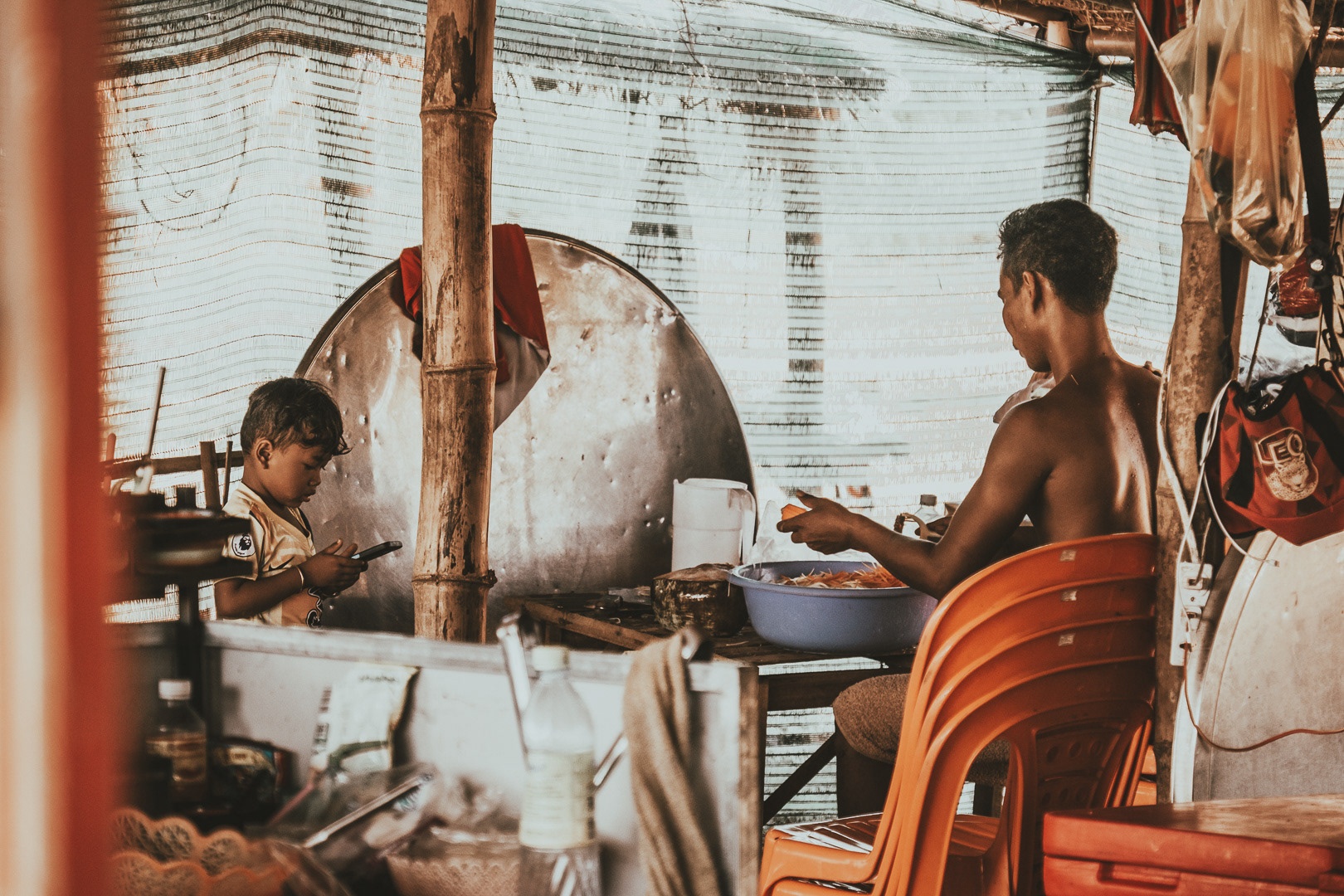
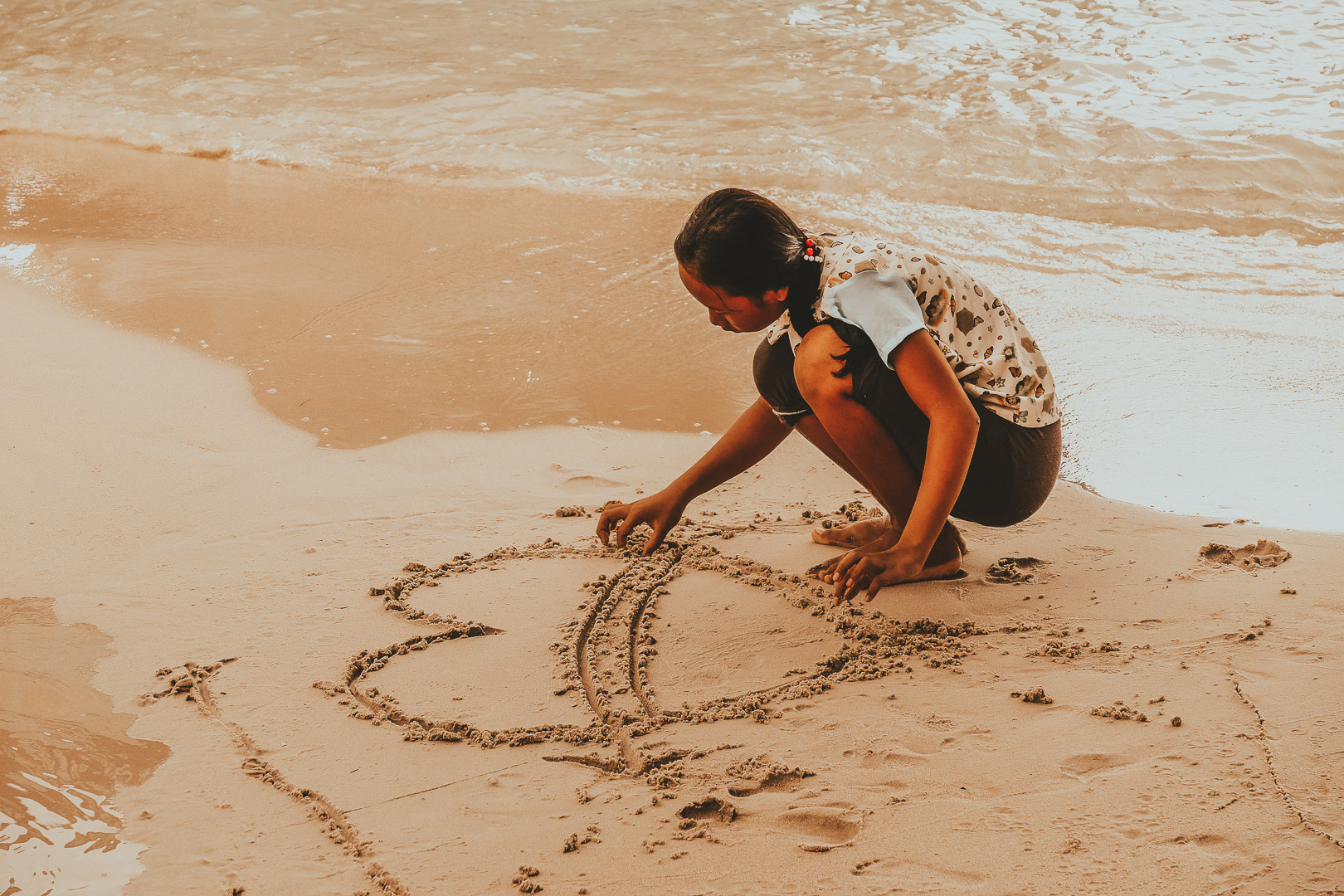
There are places that change you. There are people, colours, smells and sounds that you will forever miss. There are places that welcome you whole, naturally as if you were always meant to be there, and meet those human souls, exchanging laughter and moments of presence.
Cambodia is such place for me.

Temple dwellers




The shaving of the head
The shaving of the head is a renown ritual in the Buddhist religious practice. Mostly recognised as a prerequisite for monastic life, it represents a renunciation to the worldly pleasures and attachments which would hamper the attainment of enlightenment and simply of a higher spiritual practice. In Cambodia older people often shave their heads as a sign of devotion. Especially common in elderly women, this practice known as Yeay Chi, represents a renunciation of vanity, ego, and a profound commitment to making merit and meditating in their later years.
While travelling between the provinces of Kampong-Cham and Kratie, I decided to stop in a small village to buy some coconut water. While walking back to the car, I noticed in a front yard, an elderly couple during the ritual of head shaving. While hypnotised by the kindness of their reciprocal care, I stood there immobile. After a little while they noticed me, and so we exchanged a couple of bows and smiles. I gently showed my camera, asking whether I could take a portrait of them. With a smile and a light nod of their head, they said yes, and continued their dance of water and hands. Once the ritual was complete, they sat on their terrace and let me photograph them. I remember my admiration to such a communion of life and faith, togetherness. This is what I call beauty.


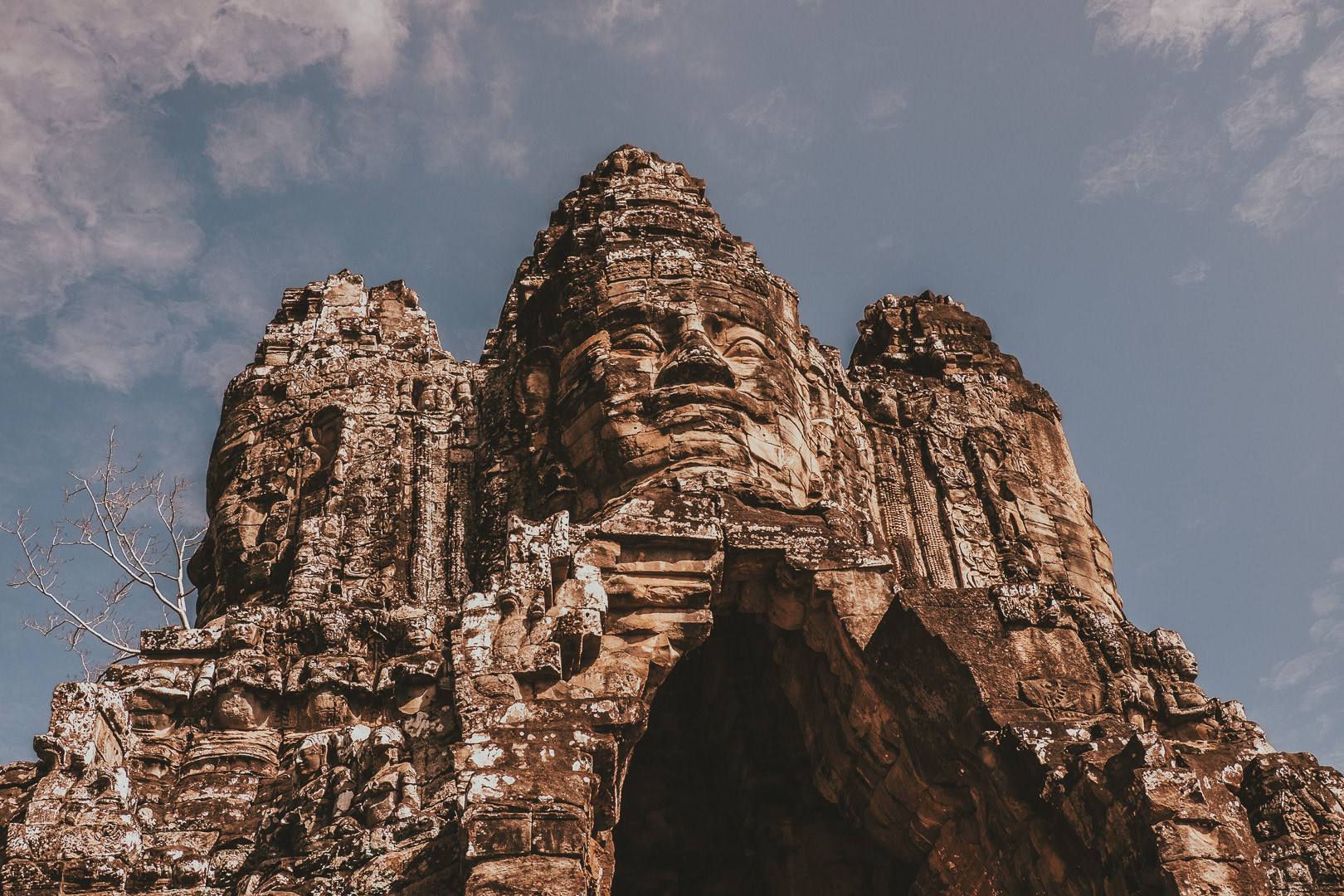
Angkor Wat
One of the World's wonders.




TONLE SAP LAKE
A land of water. The Mekong river, one of the longest rivers on earth, born in the Tibetan Plateau in today's occupied Tibetan territories of Southwest China, passes across Myanmar, Laos, Cambodia and Vietnam, where it merges into the South China Sea forming a large delta. Every rainy season the Mekong flux become so large that not enough water can enter the sea and water starts reverting its course and flooding the wetlands of the Tonle Sap lake, which more than doubles its water volume during that period, becoming fertile habitat for many fish species and for a vibrant touristic economy.